Diberdayakan oleh Blogger.

q

Tampilkan postingan dengan label Technology. Tampilkan semua postingan

Apple Watch Accessibility: Possibilities, Challenges, and Unknowns

|| || || Leave a komentar

When the Apple Watch launches next month it will mark the launch of Apple's first new product category since the iPad. The iPad was a game changer in terms of accessibility, bringing numerous features designed for people with disabilities at launch. How will the Apple Watch compare and what are some of the challenges and possibilities for the Apple Watch related to accessibility? A lot of questions remain unanswered, but the wait will soon be over.
Apple Watch is rumored to include built-in software accessibility features when launched, however these reports have not been confirmed by Apple. It would make sense and align with Apple's patterns if they included features such as VoiceOver and Zoom in the Apple Watch. While the inclusion of these features seem likely, how these features are implemented will be key for people with disabilities.
The Apple Watch could prove beneficial to people with various disabilities. Apple has already demonstrated the navigation capabilities of the Watch which include providing distinctive taps when a wearer needs to turn left or right while walking. This feature could aid blind and visually impaired users when navigating unfamiliar areas. Additionally, the device could help remind users to complete daily tasks like taking medication. The watch, which can be used for Apple Pay purchases and other forms of authentication could benefit users with physical disabilities who cannot handle a credit card for example.
Just like with the iPad, app developers will likely be key in coming up with unique assistive apps. The initial developer tools have some limitations that could hold back developers, but hopefully useful assistive apps will still be made available.
With all the potential benefits there are some challenges that stem from the device's small screen and buttons. First, the "digital crown," which is a small dial on the side of the Apple Watch, could pose challenges to users with physical disabilities and dexterity challenges. The "digital crown" which is used for scrolling and zooming may be difficult if not impossible for some people to operate. It will be interesting to see if Apple will devise a software solution to this potential challenge. Similarly, the small screen with small icons may prove difficult to press for some users.
Apple's new "force touch" gesture could also prove challenging for users with physical disabilities to preform. A "force touch" is a harder press on the touch screen display that invokes distinct actions from a lighter tap. From Apple's demonstrations, this gesture seems vital to the operation of the watch so hopefully a software solution will be available for users who are unable to preform this gesture.
Hopefully the Apple Watch will follow in the iPad's foot steps and be a game changer in terms of accessibility. If you are thinking of purchasing the Apple Watch, but have doubts about your ability to interact with the device due to a disability I would strongly recommend heading to an Apple Store in April to try one out.

Microsoft to stop producing Windows versions

|| || || Leave a komentar


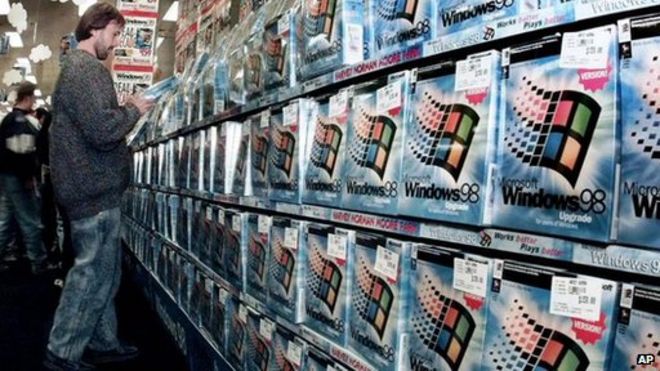
 Windows 98 launch
Windows 10 is going to be the last major revision of the operating system.
Jerry Nixon, a Microsoft development executive, said in a conference speech this week that Windows 10 would be the "last version" of the dominant desktop software.
His comments were echoed by Microsoft which said it would update Windows in future in an "ongoing manner".
Instead of new stand-alone versions, Windows 10 would be improved in regular instalments, the firm said.
Mr Nixon made his comments during Microsoft's Ignite conference held in Chicago this week.
In a statement, Microsoft said Mr Nixon's comments reflected a change in the way that it made its software.
"Windows will be delivered as a service bringing new innovations and updates in an ongoing manner," it said, adding that it expected there to be a "long future" for Windows.

'No Windows 11'

The company said it had yet to decide on what to call the operating system beyond Windows 10.
"There will be no Windows 11," warned Steve Kleynhans, a research vice-president at analyst firm Gartner who monitors Microsoft.
He said Microsoft had in the past deliberately avoided using the name "Windows 9" and instead chose Windows 10 as a way to signify a break with a past which involved successive stand-alone versions of the operating system.
However, he said, working in that way had created many problems for Microsoft and its customers.
"Every three years or so Microsoft would sit down and create 'the next great OS'," he said.

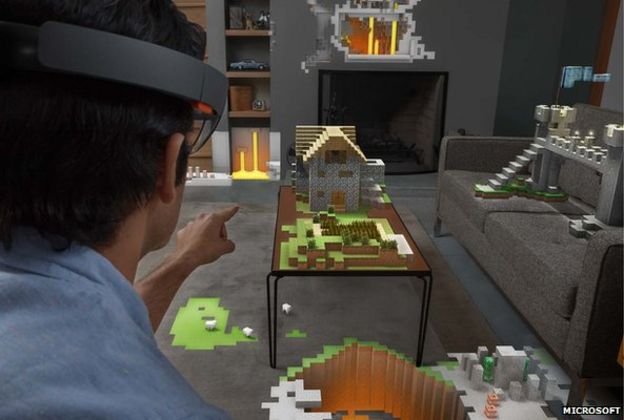
Minecraft demo
The developers would be locked away and out would pop a product based on what the world wanted three years ago."
Microsoft also had to spend a huge amount of money and marketing muscle to convince people that they needed this new version, and that it was better than anything that had come before, he explained.
Moving to a situation in which Windows is a constantly updated service will break out of this cycle, and let Microsoft tinker more with the software to test new features and see how customers like them, he added.

'Positive step'

Most of the revenue generated by Windows for Microsoft came from sales of new PCs and this was unlikely to be affected by the change, Mr Kleynhans pointed out.
"Overall this is a positive step, but it does have some risks," he said.
"Microsoft will have to work hard to keep generating updates and new features, he said, adding that questions still remained about how corporate customers would adapt to the change and how Microsoft would provide support.
"It doesn't mean that Windows is frozen and will never move forward again," Mr Kleynhans told the BBC.
"Indeed we are about to see the opposite, with the speed of Windows updates shifting into high gear."


Windows 'open' for Apple and Android

|| || || Leave a komentar
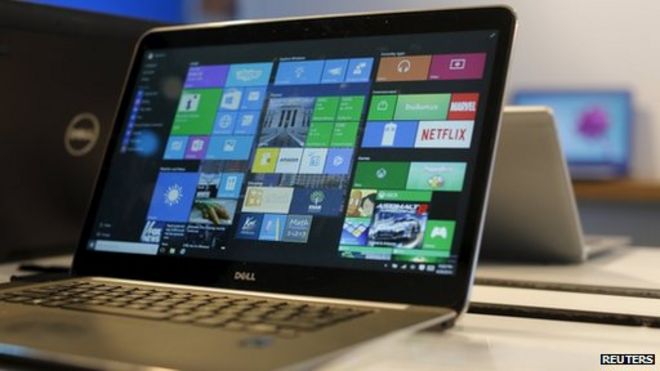
 Windows 10 laptop
Microsoft is releasing software tools that make it easier to run popular Apple and Android apps on Windows mobile devices.
By changing a "few percent", Apple app makers should be able to run code on Windows 10 mobile devices, it said.
And many Android apps should run with no changes.
Experts said the move was an "imperfect solution" to Microsoft's problems persuading people to use Windows mobile.

Popular vote

For iOS, Microsoft has unveiled an initiative called Project Islandwood, which has led to the creation of a software interpreter that works with the development tools Apple coders typically pick.
By piping code through this interpreter and changing a few other parts, it would be possible to transfer or port iOS apps to Windows 10, Microsoft said in a presentation at its Build developer conference in Seattle.
Already developers working for game-maker King have ported the massively popular Candy Crush Saga to Windows using these tools.
A separate initiative, called Project Astoria, is aimed at Android and involves code built in to Windows itself that spots when an Android app is running and gives it the responses it expects.
Microsoft said this meant many Android apps would run with no changes on Windows mobile devices.
However, the way that Android is built means changes will have to be made to some apps.
The tactic is seen as a way for Microsoft to to boost its popularity and persuade developers to include Windows 10 in their plans.
While many apps are already available on the Windows store, some popular ones, such as Pinterest and Plants v Zombies 2, are absent.
Microsoft has also added tools that let Android apps reach some parts of Windows, such as its Cortana personal assistant, they would not otherwise be able to use.
CCS Insight analyst Geoff Blaber said: "The decision to embrace Android and iOS applications is an imperfect solution to an undesirable problem.
"Nonetheless, it's a necessary move to attract developers otherwise lost to Apple and Google."

Tinder hits back at research claiming 42% of its users have partners

|| || || Leave a komentar
Dating app says it’s not rife with married flirters: ‘simple logic should reveal that it’s essentially impossible for any of these claims to be accurate’
Tinder is pushing back against research claiming lots of its users are married.
Tinder is pushing back against research claiming lots of its users are married. Photograph: Alamy
Dating app Tinder has rejected research that estimated that 42% of its users are either married or in a relationship.
A spokesman told the Guardian that the figures by GlobalWebIndex strongly contradicted its own internal numbers, and criticised the methodology of the survey.
“The results of this tiny, 681 person study in the UK is a totally inaccurate depiction of Tinder’s user base – this firm is making guesses without having any access to real data on our millions of users worldwide,” said the spokesperson.
The single largest age group on Tinder, making up more than half of our entire user base, is 18-24. More than 93% of UK residents in that age range have never been married, according to the UK’s office of National Statistics.
Without revealing any data about our users, simple logic should reveal that it’s essentially impossible for any of these claims to be accurate. Their methodology seems severely and fundamentally flawed.”
GWI’s report claimed that 38% of Tinder’s users were aged between 16 and 24, while another 45% were aged between 25 and 34. It also suggested that 30% of Tinder users that it surveyed were married, while another 12% were in a relationship.
Is it “essentially impossible” for GWI’s claims to be accurate? If 30% of Tinder users were married, it is theoretically possible for them to fall into the nearly half of the app’s users that are older than 24, by Tinder’s own figures.
This, however, would indicate that nearly 60% of Tinder’s over 24-year-old users are married, which seems unlikely. It is unclear whether Tinder’s “user base” figures refer to active or registered users, which may also have an impact on the data.
GlobalWebIndex has defended its methodology, in its own statement provided to the Guardian.
“GlobalWebIndex data is based on interviews with a panel of more than 170,000 internet users worldwide, the largest on-going study into the digital consumer - it’s not guesswork, and not just the UK, as Tinder has suggested,” said GWI’s spokesperson.
“Our Tinder findings came from a recent study of 47,622 internet users aged 16-64 across 33 countries.
Reference to ONS marital data is irrelevant, and of the 621 who say they use Tinder, almost all are from the 16-34 age group. Tinder’s assertion that our methodology is severely and fundamentally flawed is simply not correct.
We only publish statistically robust numbers, and self-reported survey data is widely recognised as an effective way of understanding consumer behaviour.”
The new statement from Tinder follows its separate rebuttal to the original report, when another spokesperson told the Guardian that “those statistics are completely inaccurate. I’m not sure how they sampled that specific group of people, but it does not represent Tinder’s user base”.
“More than 50% of Tinder’s userbase is age 18-24. And altogether, 85% of our users are age 18-34.” A statement that was not so out of kilter with GWI’s claim that 83% of Tinder users are aged between 16 and 34.
It’s the image of Tinder as a hookup app for people who already have partners that appears to be most concerning the company, however.
Throughout its history, Tinder has maintained that it is not just for arranging sex – or even for dating – preferring to pitch itself as “a social network” that people use for platonic reasons too.

'Incredible shrinking car' drives sideways to park in tiny spaces

|| || || Leave a komentar
(CNN)As cities continue to grow at a dizzying rate, commuters are constantly battling ever-increasing congestion on the roads and a lack of parking, just to get to work.
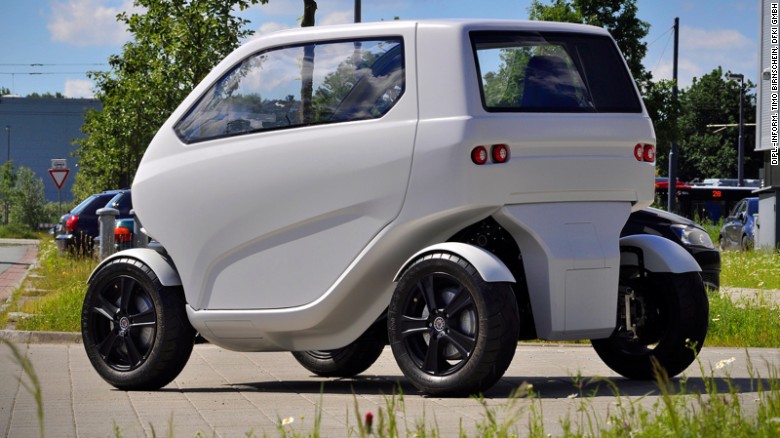
But now a team of German engineers have come up with an ingenious solution -- a "flexible" electric vehicle capable of shrinking, driving sideways (think like a crab) and turning on a dime.
The EO Smart Connecting Car 2 is an innovative design from DFKI Robotics Innovation Center, based in Bremen, Germany, where a team of software developers and designers, as well as electronics and construction engineers, have been refining the smart micro car project for the last three years.
First announced in 2012, the team have moved onto their second iteration of the vehicle. It drives like a traditional car but because each wheel is powered by its own motor, it also has the capability of driving sideways, allowing it to slide into tight spaces in urban areas where parking is limited, explains Timo Birnschein, project manager for the vehicle.
He adds: "The whole process -- the transition between normal driving and driving sideways -- takes about four seconds."

Shrink and drive

The prototype has a top speed of 65 km/h (or 40mph) and can travel 50 to 70 kilometers (30 to 44 miles) on a single four-hour full charge of the battery. But it's the two-seater's ability to shrink to around 1.5 meters in length that has the team excited about its uses in future cities, says Birnschien.
"It is able to reduce it's own size by about 80cm, which makes it almost as small as a bike in length. And with this kind of feature you can go into very tiny parking spaces," he says. "You are still able to turn on the spot, you are still able to drive sideways and you are still able to connect to charging stations, for example."
EO2 smart car.
Looking like part "Transformer" and part DeLorean out of "Back to the Future," the car reduces its size by partly folding itself. It shifts the rear axle to the front and slides on a set of rails which raises the interior upwards, while still remaining comfortable for the passenger.
Touted as a "micro car for a megacity," the team are working hard to make their vehicle roadworthy and envision it as a communal public resource, similar to existing urban car-sharing schemes. The idea is that when you need a car, you could head to your nearest docking station and select the vehicle that's charged enough to drive the distance you need. It would then detach itself and you would be on your way.
"[It] is very comparable feature-wise to the first prototype," says Birnschein. "The second version is much more reliable and almost road-legal. It's not really, but it's almost there and we are trying to bring this car to the road -- but it's a big hassle to be honest because we have so many new technologies in the car that the technical advisory guys are skeptical."
He adds that the team have invited several manufacturers to test drive the vehicle, with positive response, but the enthusiasm ends there.
"The problem is for most car manufacturers, they are not really interested if they didn't invent it themselves. They may buy from Bosch or Siemens or whatever, technology parts like ESP and other things, but not complete systems."
But his team remain undeterred as they continue working on autonomous features like auto pilot and self parking. Meanwhile Birnschein likens the situation to the rise in smartphones over the last decade -- from non-existence to oversaturation.
"It will be the same with computer power and autonomy," he says. "In the next 10 years we will most likely see autonomous cars from big car manufacturers -- Mercedes S class will have autonomous functions within three or four years. Some of other manufacturers like GM announced they will have semi-autonomous cars by 2020. And many other car manufacturers are already working on this type of technology.
"They are driving all the time on the autobahn with autonomous vehicles. I believe it will be coming -- it will be there within the next decade."